Heat-reflective roof paint in Melbourne: do cool roofs actually work?
What heat-reflective roof coatings really do in Melbourne's climate, from UNSW and University of Melbourne research: a big drop in summer roof temperature, but a winter heating penalty that cancels much of the saving on an insulated house.
:focal(720x150:1000x430))
)
Quick answer: They cut summer roof heat a lot, but on an insulated Melbourne house most of the energy saving disappears in winter. UNSW modelling for the federal government found a cool roof on an existing Melbourne house changes its yearly heating and cooling energy by -3.1% to +2.5%. Heat-reflective coatings make the most sense on uninsulated or poorly insulated roofs and rooms that overheat.
Every summer, heat-reflective roof paint gets sold hard, often with big percentage savings attached.
Melbourne isn't Brisbane, though. Our winters are long and cold enough that a roof which rejects the sun all year can cost you in heating what it saves you in cooling.
Here's what independent research on Melbourne actually found, what the brochure numbers really mean, and when a cool roof is worth it.
How much sun does your roof absorb? It depends on the colour
A roof's solar absorptance is the share of the sun's energy it soaks up, from 0 to 1. COLORBOND publishes it for every colour: Surfmist absorbs 0.33, Monument 0.73 and Night Sky 0.95.
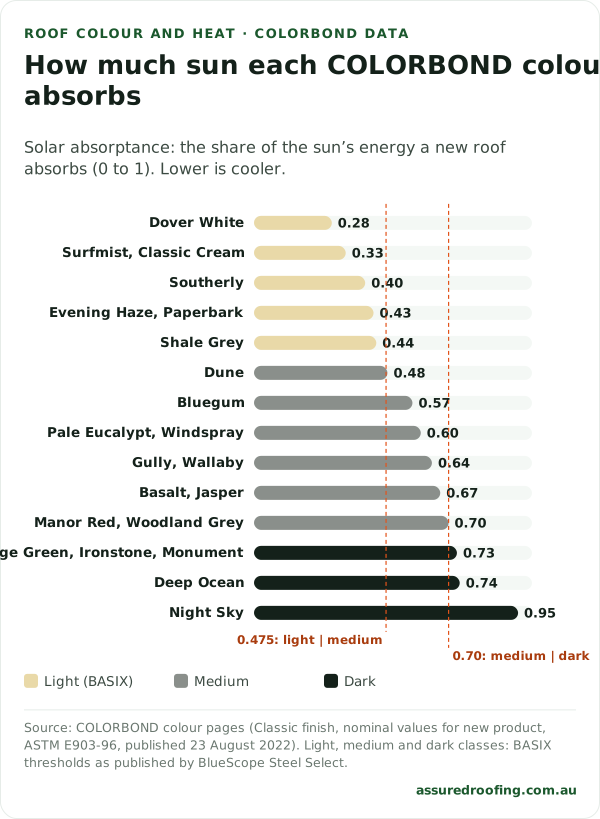
Solar absorptance of COLORBOND colours (Classic finish, new product). Every value is in the table below.
COLORBOND colour | Solar absorptance | Solar reflectance index | BASIX class |
|---|---|---|---|
Dover White | 0.28 | 88 | Light |
Surfmist, Classic Cream | 0.33 | 81 | Light |
Southerly | 0.40 | 71 | Light |
Evening Haze, Paperbark | 0.43 | 67 | Light |
Shale Grey | 0.44 | 66 | Light |
Dune | 0.48 | 60 | Medium |
Bluegum | 0.57 | 48 | Medium |
Pale Eucalypt, Windspray | 0.60 | 44 | Medium |
Gully, Wallaby | 0.64 | 39 | Medium |
Basalt, Jasper | 0.67 | 35 | Medium |
Manor Red, Woodland Grey | 0.70 | 31 | Medium |
Cottage Green, Ironstone, Monument | 0.73 | 27 | Dark |
Deep Ocean | 0.74 | 25 | Dark |
Night Sky | 0.95 | -1 | Dark |
Under BASIX, a roof below 0.475 counts as light and above 0.70 as dark (BlueScope Steel Select). You can see these colours on a real Melbourne roof with our Colorbond colour visualiser, or read about the best Colorbond colours for a Melbourne home.
In summer, a cool roof can run 33 °C cooler
On 6 January 2011, University of Melbourne researchers measured a bare metal roof at 68 °C, against 35 °C for the coolest roof coated with reflective white paint. The coated huts were 2 to 3 °C cooler inside at the hottest part of the day.
That's a real difference in a Melbourne summer. Melbourne Airport averages 3.8 days at 35 °C or hotter in January, and the UV index averages 10 (BOM; Cancer Council Australia).
In winter, it costs you heat: net -3.1% to +2.5% on an existing house
The same roof keeps rejecting the sun in winter, when you'd rather have the warmth. UNSW modelling for the federal Department of Industry put numbers on the trade for Melbourne.
On an existing house, a very reflective roof cut the yearly cooling load by 5.6 to 8.3 kWh per m², but added 6.8 to 8.5 kWh per m² to heating. The net change was -3.1% to +2.5%, and the report says the heating penalty may outweigh the cooling benefit for Melbourne homes.
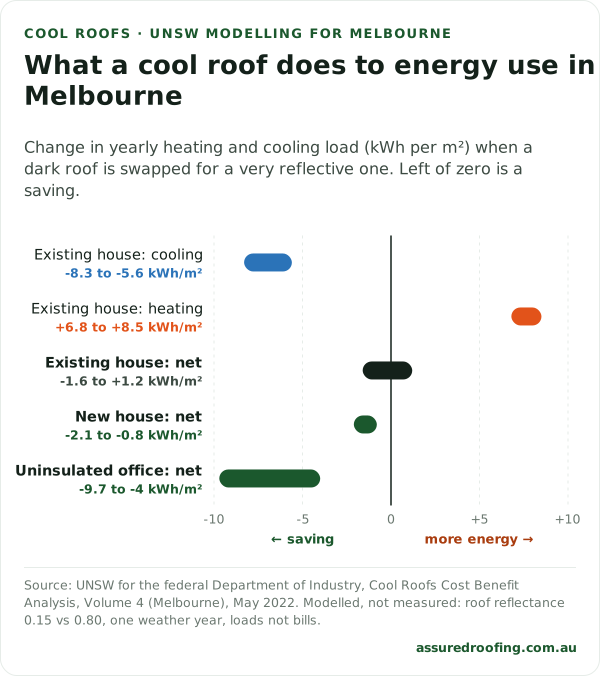
Change in yearly heating and cooling load when a dark roof is swapped for a very reflective one, from UNSW modelling for Melbourne. The figures are in the table below.
Building (UNSW model, Melbourne) | Net change in heating plus cooling | In kWh per m² a year |
|---|---|---|
Existing house | -3.1% to +2.5% | -1.6 to +1.2 |
New house | -6.5% to -2.2% | -2.1 to -0.8 |
Uninsulated low-rise office | -27.6% to -12.3% | -9.7 to -4 |
The University of Melbourne study reached the same place. Modelled with R2.5 ceiling insulation, the net yearly energy benefit of the coated roof was about zero, and the researchers concluded the coatings suit older or uninsulated buildings.
Why the brochures quote 25 to 30%
Read the fine print, because the big numbers usually come from buildings that aren't your house:
Dulux quotes UNSW's Melbourne figure of 12.3 to 27.6%, which is the uninsulated office in the table above, not a house. Dulux also notes winter heating offsets may apply.
Shieldcoat's 25 to 30% saving is claimed for commercial buildings with heavy air-conditioning use, and Shieldcoat says private homes won't see that. It doesn't publish the study details.
Solacoat claims inside temperatures 5 to 15 °C lower, without a published study design.
Good to know we use Shieldcoat membranes on our restorations, and I'd still tell you the same thing: on an insulated house, colour choice changes comfort in summer more than it changes your yearly bill.
When a heat-reflective roof coating is worth it in Melbourne
The ceiling has little or no insulation. Both studies found the biggest gains on uninsulated buildings. Check your insulation first; it may be the better spend.
Rooms under the roof overheat. Upstairs bedrooms, rooms under metal roofs and low roofs over living areas feel the summer difference most (2 to 3 °C inside at the hottest time, in the University of Melbourne huts). Roof-space ventilation is the other half of the fix; see whether whirlybirds work.
You’re recoating anyway. When a roof is being restored, the colour is a choice you're already making, and a lighter colour is a real option.
It’s a commercial or uninsulated building. UNSW's uninsulated office saved 12.3 to 27.6% a year.
It's usually not worth it for the energy alone on a well-insulated house you mostly heat. And there's no NCC roof colour limit here: the elemental solar absorptance cap of 0.64 applies only in climate zones 1 to 5, and Melbourne is zone 6.
Across the whole city, cool roofs do help: UNSW modelled Melbourne-wide cool roofs cutting the peak air temperature by up to 2.1 °C.
Cool roof options on your roof
When we restore a tile roof or a Colorbond roof, the finish colour is your call, and the solar absorptance table above tells you roughly how much sun each shade will soak up. If you're weighing it up, I'll look at your roof and ceiling and tell you honestly whether a lighter colour is worth it for your house. Ask for a free quote.
Sources and methodology
Every figure in this guide comes from a published source or from our own work. Here is where each one came from and how we used it.
Where the numbers come from
COLORBOND colour pages: solar absorptance and solar reflectance index by colour (Classic finish, nominal values for new product, ASTM E903-96, published 23 August 2022). Checked 20 September 2026.
BlueScope Steel Select, BASIX and BCA classification: light, medium and dark thresholds, and the NCC elemental cap applying in zones 1 to 5. Checked 20 September 2026.
UNSW for the Department of Industry, Cool Roofs Cost Benefit Analysis, Volume 4 (Melbourne), May 2022: modelled heating and cooling loads with and without a cool roof, and the citywide temperature effect. Checked 20 September 2026.
University of Melbourne for the City of Melbourne, Cool Roofs (September 2011): measured roof and inside temperatures, and modelled yearly energy. Checked 20 September 2026.
Bureau of Meteorology, Melbourne Airport (086282): days at 35 °C or hotter in January (1970 to 2026). Checked 19 September 2026.
Cancer Council Australia, UV statistics: January average UV index (ARPANSA data). Checked 19 September 2026.
Dulux, Shieldcoat and Solacoat product pages: manufacturer claims, quoted as claims. Checked 20 September 2026.
How we worked them out
We used each source's figures as published. The light, medium and dark column applies the BASIX thresholds to COLORBOND's published values.
Percentages are the net change in combined heating and cooling load in UNSW's model; a minus sign is a saving.
Manufacturer figures are reported as claims, with what each manufacturer says about where they apply.
How the studies we cite were done
UNSW (Santamouris and others, 2022): computer modelling, not measurement. A city climate model for January to February 2017, plus building energy models of 17 building types using BOM weather from May 2016 to April 2017. It compared a roof reflectance of 0.15 with 0.80, heated to 20 °C and cooled to 25 °C, and reported loads, not bills. Existing houses had R2.0 roof insulation, new houses R4.6. A fresh white roof at 0.80 is brighter than most coloured or weathered roofs.
University of Melbourne (2011): three full-size single-room huts and one one-third-scale hut at the Burnley campus, one with an unpainted metal control roof and the rest coated with reflective white paint, at old insulation levels (about R0.8 ceilings), monitored from December 2010 to July 2011, plus a computer model checked against the data. It was a cooler-than-average year with small huts, three products and no control hut in the winter data.
Good to know every house is different. Insulation, how much you heat versus cool, roof pitch and shading all change the result, and these studies used a brand-new white roof that most coloured coatings won't match.
Checked by Ryan Airey on 20 September 2026. Next review: October 2027. How we research, write and check our guides: editorial policy.
Frequently asked questions
Does heat-reflective roof paint work?
In summer, yes: University of Melbourne researchers measured a coated roof at 35 °C against 68 °C for bare metal, and the rooms below were 2 to 3 °C cooler. Over a whole year on an insulated Melbourne house, UNSW modelling found the energy effect roughly cancels out, between -3.1% to +2.5%.
Is a light-coloured roof better in Melbourne?
It depends on the house. A light roof keeps you cooler in summer but loses useful sun in winter. It pays off most where ceiling insulation is poor or rooms under the roof overheat.
Which roof colour is the coolest?
Among COLORBOND colours, Dover White (0.28) and Surfmist and Classic Cream (0.33) absorb the least sun, and Night Sky (0.95) the most. Under BASIX, anything below 0.475 counts as a light roof.
Do I have to have a light roof in Melbourne?
Not under the NCC's elemental provisions: the roof solar absorptance cap of 0.64 applies only in climate zones 1 to 5, and Melbourne is zone 6. If your home is heritage-listed, check your planning controls before changing colour.
Will a cool roof lower my power bill?
On an insulated Melbourne house, probably not by much. UNSW's modelling put the net change at -3.1% to +2.5% for an existing house and -6.5% to -2.2% for a new one. Uninsulated buildings gain the most.
Why do some companies claim 25 to 30% savings?
Those figures usually come from other buildings. Shieldcoat's 25 to 30% is for commercial buildings with heavy air-conditioning, and the UNSW figure Dulux quotes (12.3 to 27.6%) is for an uninsulated office, not a house.
:focal(720x150:1000x430))
)
:focal(720x150:1000x430))
)
)